
Egypt is not only about the pyramids and the Nile—it is also home to hidden treasures in the desert.
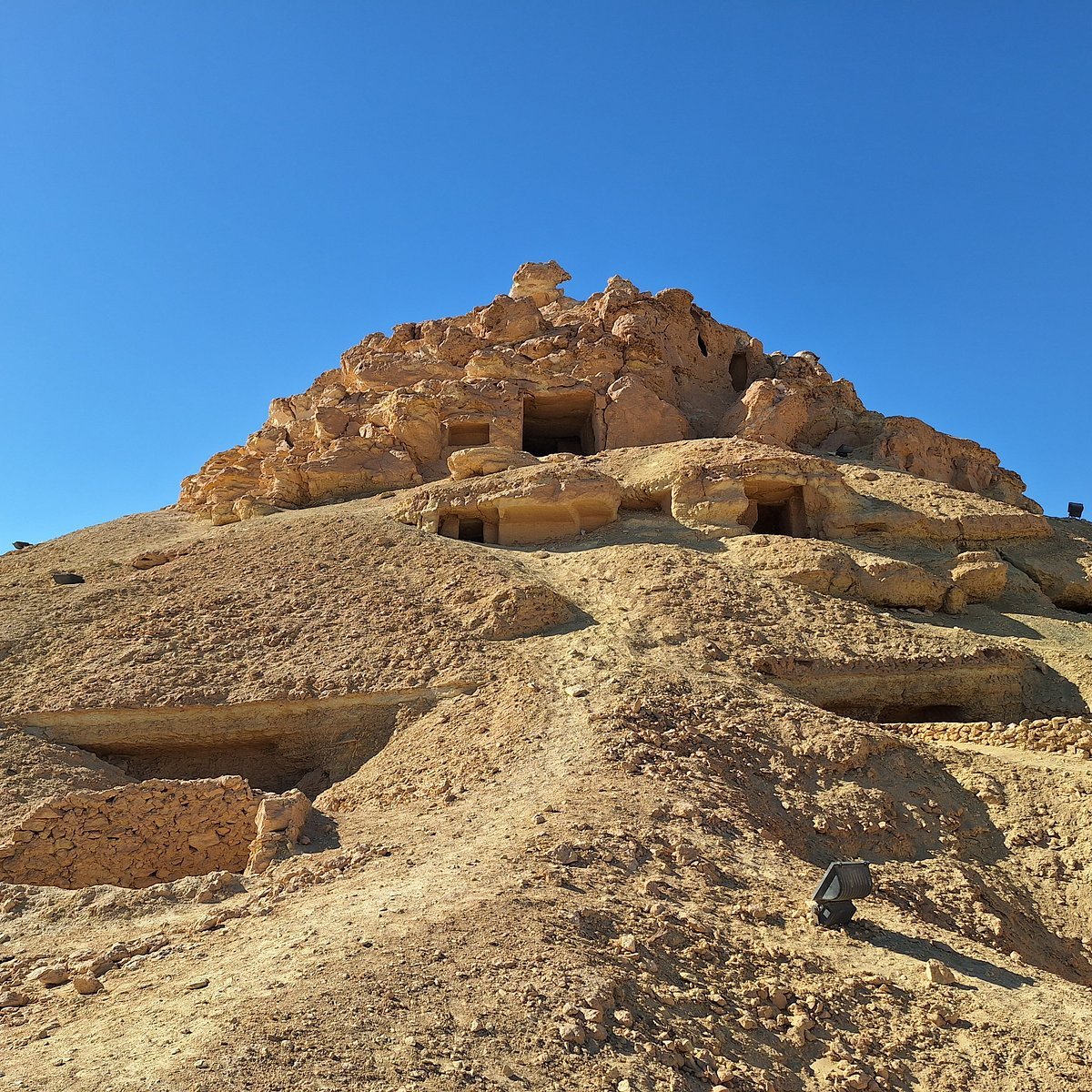
Just 2 km from the heart of Siwa Oasis, rises the conical limestone hill known as the Mountain of the Dead.
This sacred site, discovered accidentally during World War II in 1944, revealed thousands of ancient tombs carved into the rock, making it one of the most fascinating archaeological landmarks in Egypt’s Western Desert.
Location & Discovery
- Located in Siwa Oasis, about 2 km north of the town center.
- In 1944, locals seeking shelter during an air raid uncovered entrances to tombs.
- Archaeologists later identified nearly 3,000 tombs, many decorated with colorful scenes of rebirth and eternity.
Historical Background
- The earliest burials date back to the 26th Dynasty (Saite Period).
- The site continued to be used during the Greek, Roman, and Byzantine eras.
- The tombs reflect a blend of Pharaonic traditions with Hellenistic and Roman influences, showing Siwa’s role as a cultural crossroads.
Famous Tombs
- Tomb of Si-Amun: Considered the most beautiful in the Western Desert, with vivid paintings of gods and daily life.
- Tomb of Mesu-Isis: Dedicated to the goddess Isis, adorned with sacred motifs.
- Tomb of Pethut: Belonging to a priest of the 26th Dynasty.
- Crocodile Tomb: Unique carvings linked to sacred animal symbolism.
Between Myth & History
The mountain resembles a giant honeycomb, with rows of tombs stretching from its base to the summit.
Local legends describe it as a “city of the dead” guarding the souls of ancestors, while historians see it as a living archive of Egypt’s cultural fusion — blending Pharaonic, Greek, and Roman traditions.
The Mountain Today
- One of Siwa’s most popular attractions, offering breathtaking views of the oasis and desert.
- Visitors can explore tombs, admire ancient art, and feel the mystical aura of this sacred place.
- Visiting hours: 8 AM – 5 PM (9 AM – 4 PM during Ramadan).
Frequently Asked Questions (FAQs)
Q1: Why is it called the Mountain of the Dead?
Because of the thousands of tombs carved into its limestone hill, resembling a city of the dead.
Q2: How old are the tombs?
The earliest burials date back to the 26th Dynasty (7th century BC), with later use in Greek and Roman times.
Q3: What makes the tombs special?
They feature colorful paintings, sacred motifs, and unique carvings blending Egyptian and Greco-Roman styles.
Q4: Can visitors enter the tombs?
Yes, several tombs are open to visitors, including the famous Tomb of Si-Amun.
Q5: What is the best time to visit?
Morning or late afternoon, when the desert light enhances the mountain’s dramatic presence.
Conclusion
The Mountain of the Dead is more than a cemetery — it is a timeless monument, a spiritual gateway, and a living testimony to the grandeur of Ancient Egypt.
From its legendary tombs to its breathtaking views, it remains one of Siwa’s most unforgettable landmarks, blending myth, history, and mystery.