
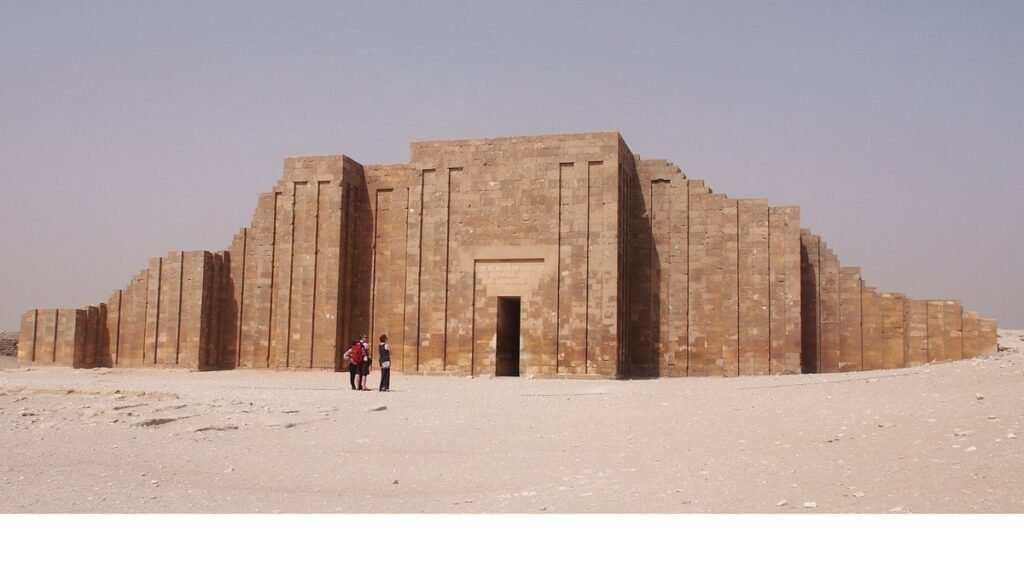
Egypt is not only about the Great Pyramids of Giza and the Nile—it is also home to one of the most groundbreaking and historic monuments in the world: the Step Pyramid of King Djoser. Located in Saqqara, this UNESCO World Heritage Site stands as the first pyramid ever built in Egypt and the earliest large-scale stone construction in human history. This article will explore the wonders of Djoser’s Step Pyramid complex and why it should be on your Egypt travel list.
The Sacred Setting: Saqqara and the Birth of the Pyramid Age
In the 27th century BCE, King Djoser of Egypt’s Third Dynasty sought a tomb unlike any before. His visionary architect, Imhotep, revolutionized construction by designing a six‑tiered pyramid made entirely of limestone. Rising to about 62 meters, the Step Pyramid marked the beginning of Egypt’s pyramid age and symbolized the king’s ascent to the heavens.
A Living Monument with Ancient Treasures
The Step Pyramid complex is not just a tomb—it is a vast ceremonial site covering nearly 37 acres. Inside its massive enclosure walls, visitors can discover:
- The Grand Entrance Colonnade, with stone columns carved to resemble palm trunks
- Courtyards and shrines used for royal rituals and festivals
- A deep burial shaft, descending nearly 28 meters underground
- Decorated chambers and storerooms, once filled with offerings for the king’s afterlife
Spiritual and Cultural Significance
The pyramid’s unique stepped design was believed to help Djoser’s soul ascend toward the gods. It also represented a turning point in Egyptian culture, where stone replaced mudbrick, ensuring monuments would endure for millennia. For modern visitors, standing before the pyramid is a chance to connect with the very origins of Egypt’s architectural genius.
Exploring Saqqara
Beyond the Step Pyramid, Saqqara is home to dozens of tombs, mastabas, and pyramids from different dynasties. The site offers a journey through Egypt’s early history, with beautifully decorated tombs, hieroglyphic inscriptions, and panoramic views across the desert plateau.
Egyptian Hospitality in Saqqara
A visit to Saqqara is enriched by the warmth of local communities. Guides share stories of Imhotep’s genius, traditional meals are offered nearby, and artisans present handmade crafts inspired by ancient designs. This cultural exchange makes the journey more than just a historical tour.
Safety and Accessibility
The Step Pyramid complex is a secure and well‑maintained site, recently restored to preserve its grandeur. It is easily accessible from Cairo, about 30 minutes by car. Guided tours provide transportation, expert explanations, and opportunities to explore surrounding tombs and monuments.
Frequently Asked Questions (FAQs)
Q1: Why is Djoser’s Step Pyramid famous?
It is the first pyramid ever built in Egypt, designed by Imhotep, and marks the beginning of monumental stone architecture.
Q2: Can visitors enter the pyramid?
Yes, parts of the pyramid and its surrounding complex are open to visitors, including the entrance colonnade and ceremonial courtyards.
Q3: What is the best time to visit Saqqara?
From October to April, when the weather is cooler and ideal for exploring the desert plateau.
Q4: How do I get to Saqqara?
Saqqara is located about 30 km south of Cairo. Tours and private cars make the journey convenient and comfortable.
Q5: Is it safe to visit Saqqara?
Yes, the site is secure and regularly visited by international travelers. Guided tours ensure a smooth and safe experience.
Conclusion
Visiting Djoser’s Step Pyramid in Saqqara is more than a trip—it is a journey into the dawn of Egypt’s pyramid age. From the grand entrance colonnade to the towering limestone steps, every corner of the complex tells the story of innovation, spirituality, and cultural transformation. Combined with the beauty of Saqqara’s desert landscape and the warmth of Egyptian hospitality, this destination offers an unforgettable experience for travelers seeking both history and wonder.