
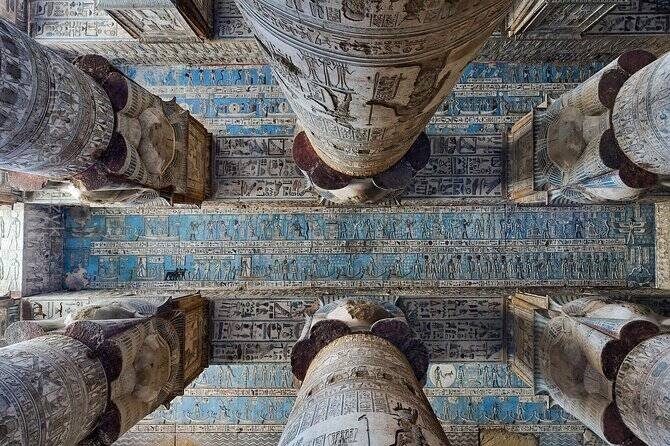
Egypt is not only about the pyramids and the Nile—it is also home to one of the most well-preserved temples in the country: the Temple of Hathor at Dendera.
Dedicated to Hathor, the goddess of love, beauty, music, dance, and motherhood, this temple is a masterpiece of Ptolemaic and Roman architecture, blending spirituality with science and art.
This article explores the wonders of Hathor’s Temple and why it should be on your Egypt travel list.
Who Was Hathor?
- Hathor was one of the most beloved deities in ancient Egypt, often depicted as a woman with cow ears, symbolizing joy, affection, and maternal care.
- She was worshipped across Egypt, but Dendera was her sacred center, making this temple her spiritual home.
History of the Temple
- The current temple was built during the Ptolemaic period (around 1st century BC) and completed under the Romans.
- The site itself dates back to the Old Kingdom, specifically to the reign of King Pepi I, showing its long-standing sacred importance.
- Over centuries, the temple became a hub for worship, astronomy, and festivals dedicated to Hathor.
Architectural Highlights
- The façade features six massive columns crowned with Hathor-headed capitals, welcoming visitors with elegance.
- The ceilings are decorated with astronomical carvings, including the famous Dendera Zodiac, now preserved in the Louvre Museum in Paris.
- Underground crypts were used for religious rituals, storing sacred objects and treasures, and can still be visited today.
- The temple also houses reliefs showing Cleopatra VII and her son Caesarion, linking Egypt’s royal history with divine worship.
Location
The temple is located in Dendera village, Qena Governorate, about 5 km northwest of Qena and 60 km north of Luxor.
It is easily accessible by car or guided tours from Luxor, making it a perfect day trip for travelers.
Spiritual and Cultural Significance
The Temple of Hathor is not only a place of worship but also a center of astronomy and science in ancient Egypt.
Its carvings reflect the Egyptians’ fascination with the stars, time, and the universe.
For visitors today, it offers a unique blend of spiritual aura, artistic beauty, and historical depth.
Frequently Asked Questions (FAQs)
Q1: Why is the Temple of Hathor famous?
It is one of the best-preserved temples in Egypt, dedicated to Hathor, and features the famous Dendera Zodiac.
Q2: Can visitors enter the temple?
Yes, visitors can explore the main halls, underground crypts, and admire the astronomical carvings.
Q3: What is the best time to visit Dendera?
From October to April, when the weather is cooler and more comfortable for exploring.
Q4: How do I get to the Temple of Hathor?
It is located near Qena, about 60 km north of Luxor. Many guided tours include transportation and professional guides.
Q5: Is it safe to visit the temple?
Yes, the site is secure and regularly visited by international travelers. Guided tours ensure a smooth and safe experience.
Conclusion
Visiting the Temple of Hathor at Dendera is more than a trip—it is a journey into love, beauty, and cosmic wonder.
From the Hathor-headed columns to the astronomical ceilings, every corner of the temple tells a story of faith, science, and art.
Combined with its accessibility from Luxor and its unique preservation, Dendera is a must-see destination for travelers seeking both history and inspiration.