
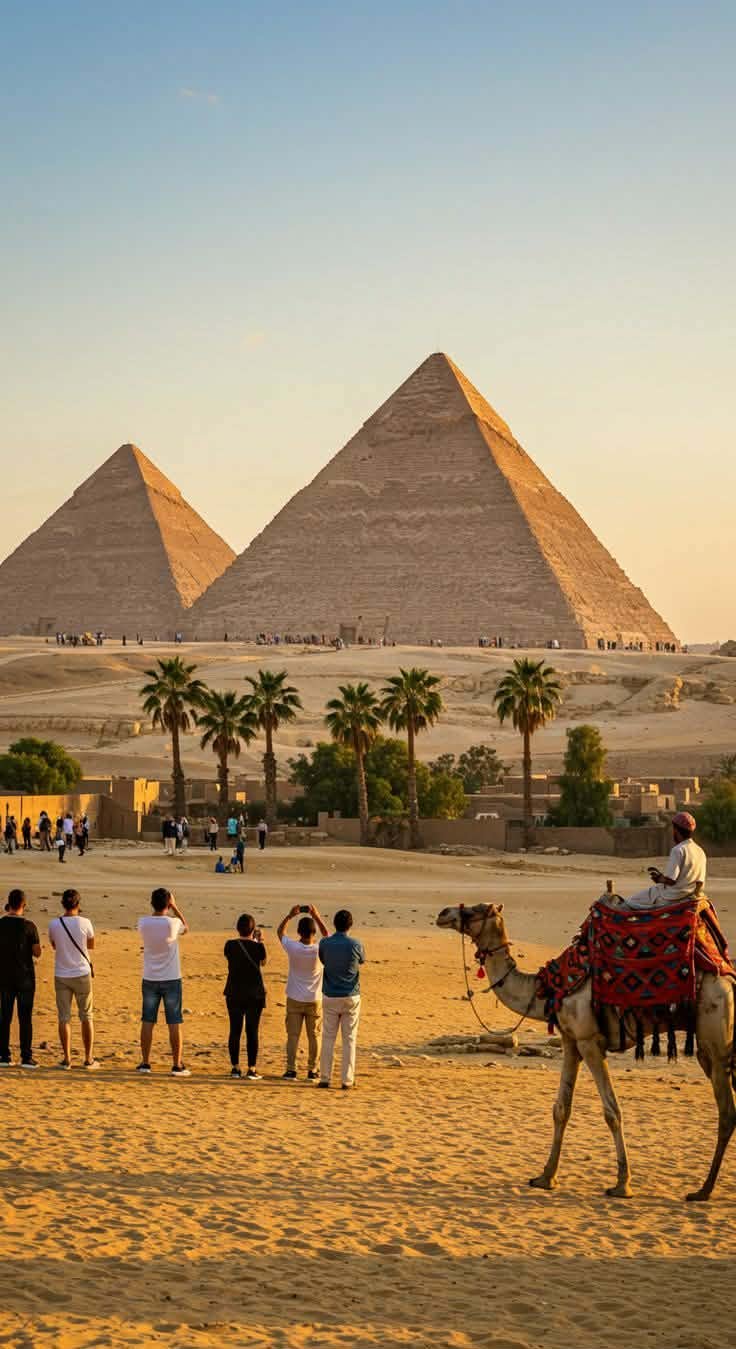
The Giza Pyramids are more than one of the world’s most famous landmarks — they are a powerful symbol of human achievement, mystery, and eternal greatness. Standing proudly on the Giza Plateau, just outside Cairo, the pyramids continue to captivate travelers, historians, and explorers from all over the world.
As the last surviving wonder of the ancient world, the Giza Pyramids represent the peak of ancient Egyptian engineering, architecture, and spiritual belief. Visiting them is not simply sightseeing; it is a journey into the heart of a civilization that shaped history forever.
A Monument Built to Defy Time
The Giza complex consists of the Great Pyramid of Khufu, the Pyramid of Khafre, and the Pyramid of Menkaure, along with smaller pyramids, temples, and the iconic Great Sphinx. Each structure was carefully designed with extraordinary precision, reflecting the ancient Egyptians’ deep knowledge of mathematics, astronomy, and construction.
Despite being built over 4,500 years ago, the pyramids remain an architectural mystery. Their massive stone blocks, perfect alignment, and enduring structure continue to raise questions and admiration among modern scientists and engineers.
The Spiritual Meaning Behind the Pyramids
The pyramids were not just royal tombs; they were sacred gateways to eternity. Ancient Egyptians believed strongly in the afterlife, and the pyramids were built to ensure the pharaoh’s soul could ascend to the heavens and live forever.
Every detail — from the shape of the pyramid to its orientation — carried spiritual significance. The pyramid shape symbolized the sun’s rays, representing rebirth, power, and divine connection. This deep spiritual meaning is what gives the pyramids their unmatched presence and emotional impact.
A Unique Visitor Experience
Visiting the Giza Pyramids is an unforgettable experience that blends history, culture, and natural beauty. Walking across the desert sands, standing face to face with these colossal structures, and witnessing their scale firsthand creates a sense of awe that cannot be replicated anywhere else in the world.
Visitors can explore the plateau, enter selected pyramids, enjoy panoramic views, and even experience traditional camel rides across the desert — a timeless scene that perfectly captures the magic of Egypt.
The Pyramids and Egypt’s Global Legacy
The Giza Pyramids are the cornerstone of Egypt’s global identity and tourism industry. They attract millions of visitors each year and continue to inspire fascination across cultures and generations.
As a UNESCO World Heritage Site, the pyramids are preserved not only as historical monuments but as living proof of humanity’s ability to dream, build, and leave a lasting legacy.
Discover the Giza Pyramids with Sofy
With Sofy, your visit to the Giza Pyramids becomes a seamless and enriching experience. We provide expertly planned tours, professional guides, and personalized itineraries that allow you to explore the pyramids comfortably and deeply.
At Sofy, we believe the pyramids should be experienced with understanding, not rushed through. Our tours focus on storytelling, cultural insight, and meaningful exploration, ensuring that every moment at the pyramids becomes a lasting memory.
Why the Giza Pyramids Should Be on Your Travel List
The Giza Pyramids are not just monuments of stone — they are monuments of human ambition, belief, and brilliance. They remind the world that true greatness never fades.
If you are seeking a destination that combines mystery, beauty, history, and inspiration, the Giza Pyramids are unmatched.
With Forver Tours you don’t just visit the pyramids —
you experience the soul of Ancient Egypt.
#GizaPyramids
#PyramidsOfGiza
#VisitEgypt
#ExploreEgypt
#AncientEgypt
#EgyptianCivilization
#EgyptHistory
#UNESCOWorldHeritage
#CulturalTourism
#HeritageTravel
#BucketListDestination
#TravelEgypt
#LuxuryTravelEgypt
#EgyptExperience
#ForeverToursTravel
#TravelWithForever